

Over the years, Estonia has consolidated its position as one of Europe’s most dynamic startup hubs. With over 863 startups and three unicorns, the Baltic country is quickly becoming one of Central Europe’s main innovation forces.
According to the Startup Ecosystem Report 2025 conducted by global research platform StartupBlink, which analyzed ecosystems across 100 countries, Estonia climbed to 11th place globally, rising for the second consecutive year.
The country now sits just shy of the top 10, less than one percentage point behind the Netherlands- which accounts for 2,619 startups and grew by 26.2% in the last year.
“Estonia has become one of Europe’s most agile innovation ecosystems. The Estonian Leap Program in Davos 2026 will spotlight how a digitally native nation can influence global tech priorities,” said Kevin Varend and Yip Thy Diep Ta, founders of J3D.AI, while in conversation with 150sec.
As a Tallinn-based international advisory and technology company, J3D.AI provides a collaboration platform that helps organizations, think tanks and conferences turn large amounts of multimodal data into structured insights and actionable reports.
The company’s executives further noted that Estonia’s culture- rooted in rapid execution, digital governance, and strong public-private collaboration- has enabled it to consistently produce companies that scale beyond borders and expectations.
Public and private sectors drive growth
A prominent driver of this momentum is Startup Wise Guys, one of Europe’s most active accelerators with over 440 startup investments. Its portfolio includes Estonian standouts like Bolt, Katana MRP, and Skeleton Technologies.
In this, transportation remains Estonia’s leading vertical, ranked second worldwide and first in Eastern Europe. This sector alone comprises 23 startups, making up 3% of the national total.
And, as signaled by the Startup Estonia White Paper 2021–2027, the country continues to strengthen its ecosystem through a sustained focus on scaling the startup and technology sector.
Startup Estonia, for one, is the government’s flagship program which continues to drive policymaking, infrastructure development, and international positioning.
Launched in 2015 through an executive order by the Ministry of Entrepreneurship, the program aims to build on the early successes of Estonian startups and shift from isolated achievements toward a fully developed startup ecosystem.
Since its founding, Startup Estonia has evolved into a platform set to make the country one of the best settings for entrepreneurship, partnering with startups, incubators, and accelerators across both public and private sectors alike.
The program provides training programs for startups, seeking to educate local investors, promote foreign investment and address regulatory challenges.
Meanwhile, events like Latitude59 and sTARTUp Day further reinforce these public efforts by turning national strategy into global visibility, networking opportunities, and international engagement.
As a startup-minded business festival, sTARTUp Day brings startups, traditional entrepreneurs, investors, innovators, and students together to celebrate entrepreneurship in Estonia’s smart city.
The next edition will take place from January 28 to 30 in the western city of Tartu, and is expected to be attended by more than 3,000 participants.
Latitude59, on the other hand, will return to Tallinn from May 21 to 22 of 2026 for its 13th edition. As the flagship event for the Baltic and Nordic tech ecosystem, its mission is to use the tools, talent and expertise of its stakeholders to address global challenges.
The 2026 edition is expected to welcome 3,500 visitors, with representation from 70 countries and more than 180 speakers.
“Estonia’s rise as a global startup hub is no coincidence- it is the result of relentless innovation, digital-first governance, and a bold entrepreneurial spirit,” said Erkki Keldo, Estonia’s Minister of Economy and Industry.
“From unicorns to early-stage pioneers, our ecosystem is built on trust, openness, and agility,” he added.
The government’s digital-first philosophy has become one of Estonia’s greatest competitive advantages. Programs like e-Residency, the Nomad Visa, and fully digitized company administration tools have given the country global visibility among remote founders, and digital nomads.
“These efforts have created visibility and strong branding for Estonia among digital nomads and small business owners in many developing countries— an impressive feat for a nation of fewer than two million inhabitants,” StartupBlink noted.
A paradoxical scene
Talent acquisition and sustainability, however, remain a challenge. With much of the Estonian workforce already employed in startups, competition is intense, pushing the country into attracting specialists from abroad.
The Work in Estonia government initiative, for one, was launched in 2015 seeking to attract IT experts and skilled professionals in science and engineering to fill these gaps.
The country’s digital infrastructure also feeds into key strengths across IT, cybersecurity, transportation, fintech, and public-sector innovation. Estonia’s Defence Fund is now accelerating support for startups developing cutting-edge military and security solutions- a field gaining strategic relevance across Europe.
But, Estonia must also ensure that such efforts bring high-growth startups with global potential- not just lifestyle businesses.
As 2025 draws to a close, it is evident that the country’s economy remains a challenge. With Estonia’s GDP contracting from mid-2021 until the end of 2024, new entrepreneurs and investors are growing wary, which has resulted in fewer new companies and a smaller volume of investment.
Regardless, Startup Estonia sustained that the growth of the startup sector is not stagnating, and revenue per employee is sharply rising. Data from the first half of 2025 indicates that the sector remains resilient, despite broader economic pressures.
The scene is thus paradoxical: younger companies reported strong revenue growth, but also faced workforce reductions and a continued decline in new venture formation since 2022.
Investments fell by 28%, reflecting local caution in an uncertain climate, but deep tech retained a dominant position and early-stage companies captured 81% of funding- indicative of the continued bet on targeted innovation.
Demographic trends also reveal a highly educated, middle-aged workforce, alongside pronounced gender disparities; 83% of founders and 63% of employees are male.
International diversity also remains limited, as visa programs increasingly prioritize experienced specialists over new entrepreneurs.
What’s next for Estonian ecosystems
Even so, the country remains exemplary, even for Europe’s most startup-intensive economies. As signaled by the New York-based Frost & Sullivan Institute consulting firm, Estonia’s defining strength is an integrated digital government that outperforms leaders like Denmark and Singapore.
Estonians can file taxes in under three minutes, register a business in under 15, and vote online, all without setting foot in a government office. The frictionless administrative environment is just another of the country’s appeals for global founders.
When asked about Estonia’s strongest opportunities for AI innovation over the next five years, Varend and Diep Ta emphasized that “the most exciting opportunities in AI sit at the intersection of trusted data and sovereign digital infrastructure”
“Estonia is perfectly positioned to lead this next chapter heading into 2030,” they stressed.
Estonia, then, has already proved its ability to produce global talent, and foster entrepreneurial innovation at the heart of its public policy. The next step, however, will be retaining the startups it has earned as they scale, which will in turn ensure that it remains Europe’s small but mighty innovation hub.
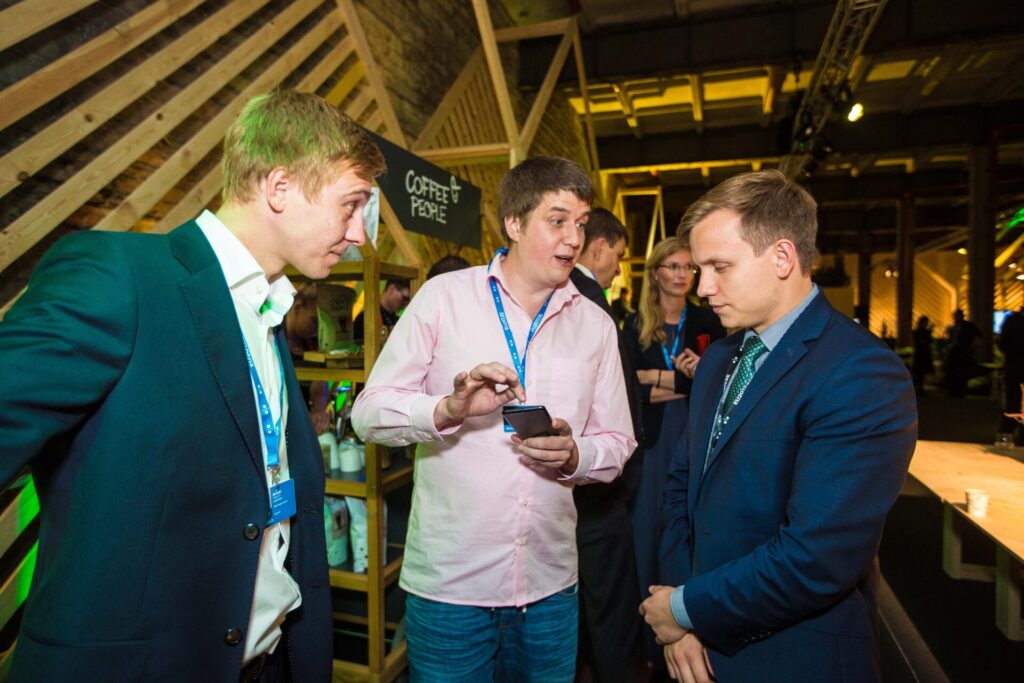
Featured image: Networking event for journalists with Estonian startup community
Author: Ivan Panasjuk via Wikimedia Commons
License: Creative Commons Licenses
Disclosure: This article mentions a client of an Espacio portfolio company.